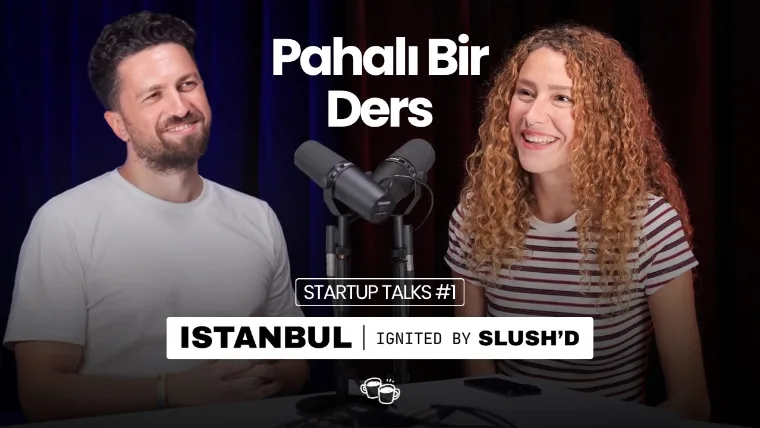
In 2024, Robert F. Kennedy Jr.'s presidential campaign ran its website chatbot on LiveChatAI. We didn't know OpenAI had banned political campaigns from using its models until a WIRED reporter emailed us on deadline. I later told the story at Fuckup Nights Ankara, and the video is below with English subtitles.
The Kennedy campaign found LiveChatAI through organic Google search. They trained a chatbot on Kennedy's own statements and put it on the campaign website, so supporters could ask it questions. The campaign called it an interactive FAQ.
Everything was new back then. We worked hard to make sure the bot gave his audience accurate answers, from his own words and nothing else.
The email from WIRED
On February 29, 2024, at 10:13 p.m. Istanbul time, an email came in with the subject line "REPORTER ON DEADLINE: LiveChatAI bot & RFK Jr. campaign." It was from Makena Kelly, a senior politics writer at WIRED. She was publishing a story that day and wanted two things confirmed: that the campaign was our client, and that the bot used OpenAI models. The campaign, she wrote, seemed to be violating OpenAI's policies on political use.
That was news to me. In January, OpenAI had announced it wouldn't allow its technology to be used for political campaigning. We didn't know. I didn't know. OpenAI's terms of use run to about 50 pages, so I had ChatGPT summarize them for me.
Her deadline was 5:30 p.m. Eastern, 1:30 a.m. for me. I replied at 12:22. We couldn't confirm or deny any client's usage, our platform used models like Llama and Mistral as well as GPT-3.5 and GPT-4, and we had started a review of the account. WIRED quoted that reply in the story.
The bot disappears
While we reviewed the account, we switched the campaign's chatbot off. By Sunday the widget on the Kennedy site just said "Chatbot not found," and Makena noticed: "Did LiveChatAI take down this bot?" Twenty minutes later she wrote again. Since the bot had disappeared, they were going up as soon as possible. The story ran with the headline "Robert F. Kennedy Jr.'s Microsoft-Powered Chatbot Just Disappeared."
Those few days were incredibly stressful. A presidential campaign was our customer, WIRED was writing about us, and the rule we had apparently broken was OpenAI's.
Microsoft
There are two ways to use OpenAI's models. You can go to OpenAI directly, or you can use them through Microsoft's Azure OpenAI Service. LiveChatAI ran on Azure.
That turned out to be everything. A Microsoft spokesperson told WIRED that its customers weren't bound by OpenAI's terms of service, and that the Kennedy chatbot wasn't violating Microsoft's policies. We heard the same from Microsoft Azure directly: Azure didn't have a policy that blocked political use. Or, as I put it on stage, banned at OpenAI, not at Microsoft's OpenAI.
Back online
On Monday I wrote to the campaign. Microsoft had told us there was no problem, so if they were comfortable with the responsibility and agreed to keep using Azure OpenAI under those conditions, we could reactivate the account. About an hour later the answer came: "Please reactivate our chatbot." They added that it was "simply acting as an FAQ for the site and our policies only."
We switched it back on. WIRED updated the story, and the headline changed from "Just Disappeared" to "Is Back Online." On Tuesday I confirmed it to Makena: Microsoft had found no violation of its policies, and we had reactivated the account.
Telling it at Fuckup Nights Ankara
At Fuckup Nights, people get on stage and talk about their failures instead of their successes. In Ankara, this was mine. The clip opens with Popupsmart V2, then gets to Kennedy. The talk is in Turkish, so I added English subtitles.
Looking back
The rule we ran into wasn't in our terms or in our customer's. It was in the terms of the company whose models we build on. Those terms were part of our product whether we'd read them or not, and I found out what was in them from a ChatGPT summary, with a reporter's deadline running.
Where a model runs matters as much as which model it is. The same GPT-4 was off-limits for campaigns through OpenAI and allowed through Azure. If we had been on OpenAI's own API, I don't think this story would have ended well. On Azure, Microsoft stood by us.
At the time I wrote about it on LinkedIn, in Turkish: "As you know, political use of OpenAI services is banned. But if you use OpenAI on Microsoft Azure, you have no such obligation :)" A few days earlier I hadn't known the rule existed.
If you're building on someone else's model, read their usage policy now, before a customer or a reporter makes you. And check where your models actually run.